How the late pontiff digitized the Vatican’s treasures—and what his successor will inherit
On April 21, 2025, Pope Francis passed away, leaving behind not only decades of sweeping church reforms but also a Vatican deeply engaged in digital preservation and access. Under his leadership, the Vatican Library launched an unprecedented effort to digitize tens of thousands of medieval manuscripts via the DigiVatLib portal, while a partnership with Microsoft and Iconem produced a petabyte‑scale “digital twin” of St. Peter’s Basilica. As cardinals prepare to elect his successor, they will inherit not just centuries‑old scrolls but sprawling online archives, AI‑driven conservation tools, and a multimedia infrastructure that has reshaped how the faithful experience the Church’s heritage.
A Pontiff’s Vision: Modernizing Ancient Archives
Early in his pontificate, Pope Francis emphasized opening the Church’s hidden repositories to the world. In 2014, the Vatican signed an €18 million agreement with NTT DATA Italia to scan 3,000 rare codices over four years, an effort he personally championed as a way to “open the doors” of centuries‑old knowledge . By April 2025, the DigiVatLib platform had made 27,500 medieval codices freely accessible online, with another 52,500 awaiting upload—part of an overall goal to digitize 80,000 manuscripts spanning the Middle Ages to the Renaissance.
Originally launched in 2010, DigiVatLib evolved under Francis into a robust digital portal. It uses Dell EMC storage and CIFS protocols to ensure long‑term preservation, while metadata follows international FITS and PREMIS standards for authenticity and discoverability. Scholars can now search by shelfmark, title, and full‑text OCR, enabling research that once required travel to Rome. This democratization of access transformed the Vatican Library from a cloistered archive into a global knowledge hub.
Building the 3D Basilica: Petabytes for Preservation
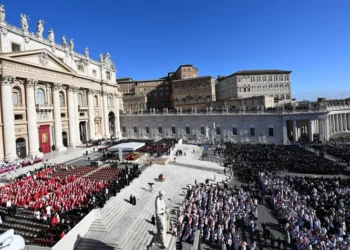
In late 2024, ahead of the 2025 Jubilee, Pope Francis approved a partnership with Microsoft and Iconem to create a 3D digital twin of St. Peter’s Basilica. Over six weeks, drones, laser scanners, and ground crews captured 400,000+ images, generating 1.2 petabytes of data . This high‑fidelity model supports virtual pilgrimages, interactive education, and Artificial Intelligence‑driven structural analysis—identifying micro‑fractures invisible to the naked eye. The project marked the Vatican’s first foray into large‑scale AI conservation.
Pope Francis insisted that technology serve spiritual—and not commercial—ends. Vatican IT architects implemented strict access controls, using end‑to‑end encryption and role‑based permissions to safeguard sensitive materials . They also established a Vatican data stewardship council to govern cloud hosting, ensuring that private donors and researchers alike benefit without compromising theological integrity. Still, debates continue over how open the archives should be, and who bears responsibility for digital preservation.
The Next Pope’s Inheritance
With Pope Francis gone, his successor will assume stewardship of both the Church and its digital patrimony. Cardinals will not only guide the faithful but also oversee petabytes of digitized codices, an AI‑augmented basilica, and a multimedia infrastructure that streamed the late pope’s funeral to 100 million viewers across 5G and satellite channels . Balancing tradition with innovation, the new pontiff must determine how to expand access, maintain security, and preserve the Church’s heritage in an age where faith and technology are inextricably linked.
Pope Francis died on April 21, 2025 at 7:35 a.m. CEST in his residence at Casa Santa Marta.His body was taken to St. Peter’s Basilica on April 23, 2025, where it will lie in state for public homage until the funeral. He will be buried on April 26, 2025, at the Basilica of St. Mary Major—honoring his wish to rest alongside seven of his predecessors. Thereafter, between May 6 and May 12, 2025, the College of Cardinals will convene the conclave in the Sistine Chapel to elect his successor.